
冰与火之歌第一季
German Media Fears Putin Preparing New ‘Raw Materials Trap’ for West_我的网站

A |
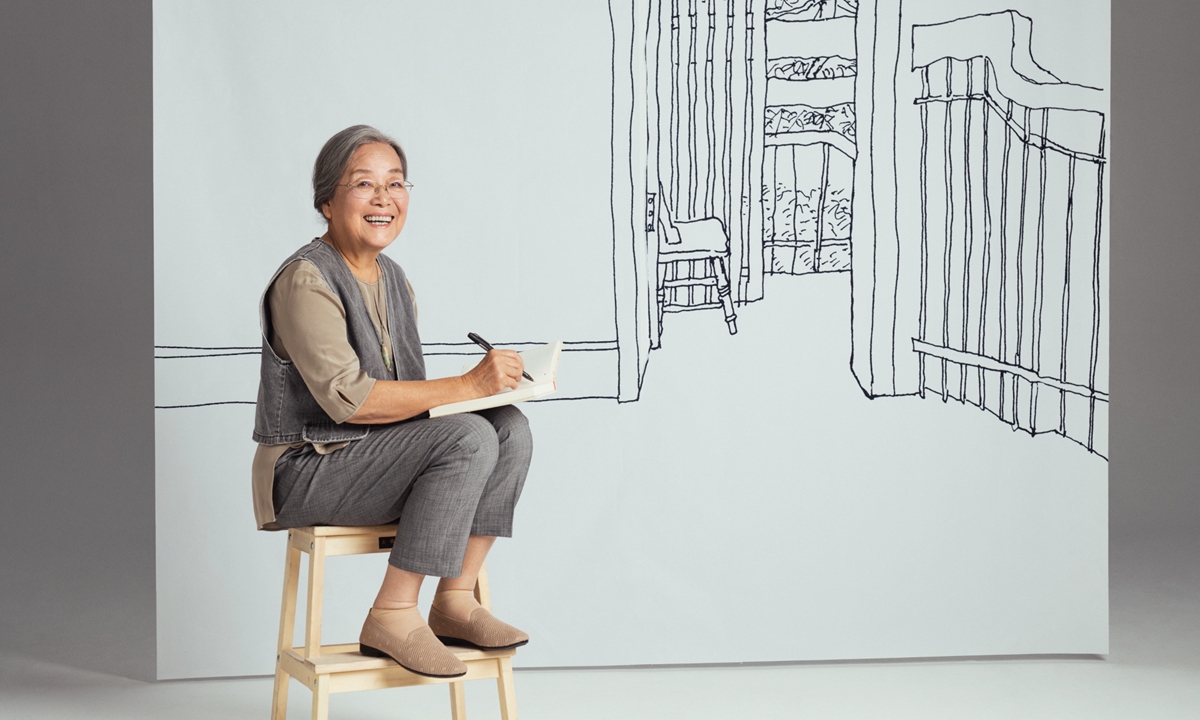
The prize is awarded every two years by the International Board on Books for Young People (IBBY) to a living author (since 1956) and illustrator (since 1966). The award is often referred to as the "Nobel Prize for children's literature," honoring lifelong achievements that have made a lasting and important contribution to children's literature.
During the award ceremony, IBBY President Basarat Kazim praised Cai for the elegant, unrushed style in her works, which encourages children to look closely and discover beauty in quiet corners, according to the Guangming Daily.
Kazim said Cai's works have an unhurried elegance that encourages children to look closely and discover beauty in quiet, everyday moment.
"This year's winner, Cai Gao, is extremely special. She is as beautiful a person as the drawings she does," Kazim said.
Following author Cao Wenxuan's win of the Hans Christian Andersen Awards as a writer of children's literature in 2016, Cai's achievement means that Chinese creators have now won both the author and illustrator categories, a "double victory."
In her acceptance speech, Cai said, "The future of the world lies in children. There is no greater happiness than creating for them." She also noted that children's books are bridges, connecting cultures and hearts around the world.
Reflecting on her childhood and her years teaching in rural villages, Cai recalled that after six years working as a rural primary school teacher in the 1980s, she joined a publishing house, where she spent two decades as a children's book editor. "This job taught me the most important lesson: to see life through the eyes of a child, and to use art as a way of expressing my feelings about life," she noted.
"I feel the profound weight of this gift from life. I'm filled with mixed emotions. I'm moved and grateful for everything I've been through. Every experience has shaped me into the person I am today," she added.
Alongside her editing career, Cai kept creating original picture books. Her well-known book Yueliang Baba is based on folk songs her grandmother would sing in her native Changsha dialect. Works like Huocheng 1938 (lit: Fire City 1938) were inspired by memories of wartime in Changsha, capital of Central China's Hunan Province. The rural scenery and farming scenes in The Land of the Peach Blossom, a book which is also listed as textbooks for primary school students in Japan, all reflect her lifelong connection to the Hunan countryside and many years quietly editing books at her desk, according to the China News Service.
Though her illustrations reflect the atmosphere of the times, Cai told the Global Times that her stories' true intentions go beyond the visual; she hopes her work can teach children that "fearlessness and love are ways to overcome hardship."
Books such as Bao'er, Hua Mulan, The Land of the Peach Blossom, and The Hundred Birds' Feather Robe have established Cai as an illustrator who skillfully interprets traditional Chinese culture. She constantly revisits the classics, striving to connect ancient stories to contemporary social and cultural themes.
Before winning the Hans Christian Andersen Award in 2026, Cai became, in 1993, the first Chinese illustrator to win the Golden Apple Award, one of the world's top international honors for children's illustration. Cai has always emphasized that these awards do not belong to her alone.
"When I learned that I had won the award, my first thought was of all the creators of my generation. This award is not just mine, it belongs to all of us," she said.
Cai's victory fills a six-decade gap for Chinese illustrators in the award's history, Zhang Peng, an associate professor at Nanjing Normal University and also president of the university's publishing house, told the Global Times. It also shows that original picture books, rooted in Chinese tradition and told with Eastern aesthetics, are fully capable of earning global recognition, Zhang added.
Zhang noted that for a long time, the Chinese children's book market was dominated by foreign imports, and local authors often struggled with the anxiety of imitating Western works. At 80, Cai has set a striking example for the industry with her use of ink-and-wash folk art, proving that the more grounded in national culture a work is, the wider its global reach. This has inspired greater confidence among local creators and encourages more people to focus on traditional Chinese culture, while paving the way for Chinese children's books to go global.
"Cai's achievement is no accident. It marks the moment when Chinese children's books truly found their own voice on the world stage," Zhang said.
。 Vladimir Putin has prepared a cunning new “raw materials trap” relying on Bolivia’s fledgling lithium mining industry, with the trap expected to “snap shut” and leave the West again dependent on Russia for its raw material needs, Welt contributor Tobias Kaufer fears.,Pointing to the Latin American nation’s massive, untapped deposits of lithium, Kaufer expressed concerns over Russia’s interest in helping Sucre tap these resources, which are crucial for the production of batteries for electric vehicles.,According to the US Geological Survey, Bolivia’s proven lithium reserves are the largest in the world, with the country’s 21 million tons ahead of Argentina and Chile (which have 19 and 9.8 million tons-worth of reserves, respectively, and together account for more than 30 percent of global lithium output).,“Those with access to the deposits can have a say in the commodity’s prices and availability. Russia apparently has particularly good chances in Bolivia at the moment,” Kaufer wrote. For Europe, he warned, Moscow’s success in the lithium ‘poker game’ would make the commodity another area where the EU depends on Russia, just like with oil and gas.,Russia’s success will be contingent on “the outcome of the Bolivian political crime thriller,” the contributor stressed, pointing to the raging struggle between President Luis Arce, a member of former president Evo Morales’ Movement for Socialism party, and right-wing forces backed by the US attempting to overthrow leftist forces.,Ex-Bolivian President Jeanine Anez Sentenced to 10 Years in Prison Over 2019 Coup11 June, 01:54 GMT,“This is where Russia comes in. Morales is considered a clear supporter of Vladimir Putin,” Kaufer wrote, recalling the former president’s calls for an “international mobilization to stop the interventionist expansionism of NATO and the United States” in March following the escalation of the crisis in Ukraine, and years of efforts by Sucre to shore up ties with Moscow during his presidency.,“If Moscow now succeeds in supporting the socialist’s return to power, the path to the lithium deposits would be clear. At the very least, Morales could urge President Arce to sign a deal with the Russians,” the Welt contributor believes.,Rosatom, the Russian state nuclear giant, has expressed interest in helping Bolivia tap its lithium riches, and is one of six companies which have applied for their development. Others include Lilac Solutions (a US-based start-up with investments from BMW and Bill Gates’ Breakthrough Energy Ventures), Chinese battery giant CATL, and three other Chinese companies.,Along with its interest in Bolivia’s lithium, Rosatom has teamed up with Norilsk Nickel to mine for lithium ores in Russia’s Murmansk region. Last year, the company also announced plans to build a major lithium ion cell manufacturing facility in Kaliningrad, with the ambitious project hoping to begin churning out up to 4 GWh worth of batteries, or about 0.5 percent of total global demand, by 2024.,Morales' Legacy: Bolivian Joint Nuclear Project With Russia's Rosatom Unique for Latin America10 June 2021, 16:53 GMT。
Current article:http://v7gtc.minshixuanhabing.bond/trodz/20260826/4767936.html
Published on:02:31:37


