nba
连日来持续降雨 厦门“菜篮子” 量足价稳_我的网站

A |
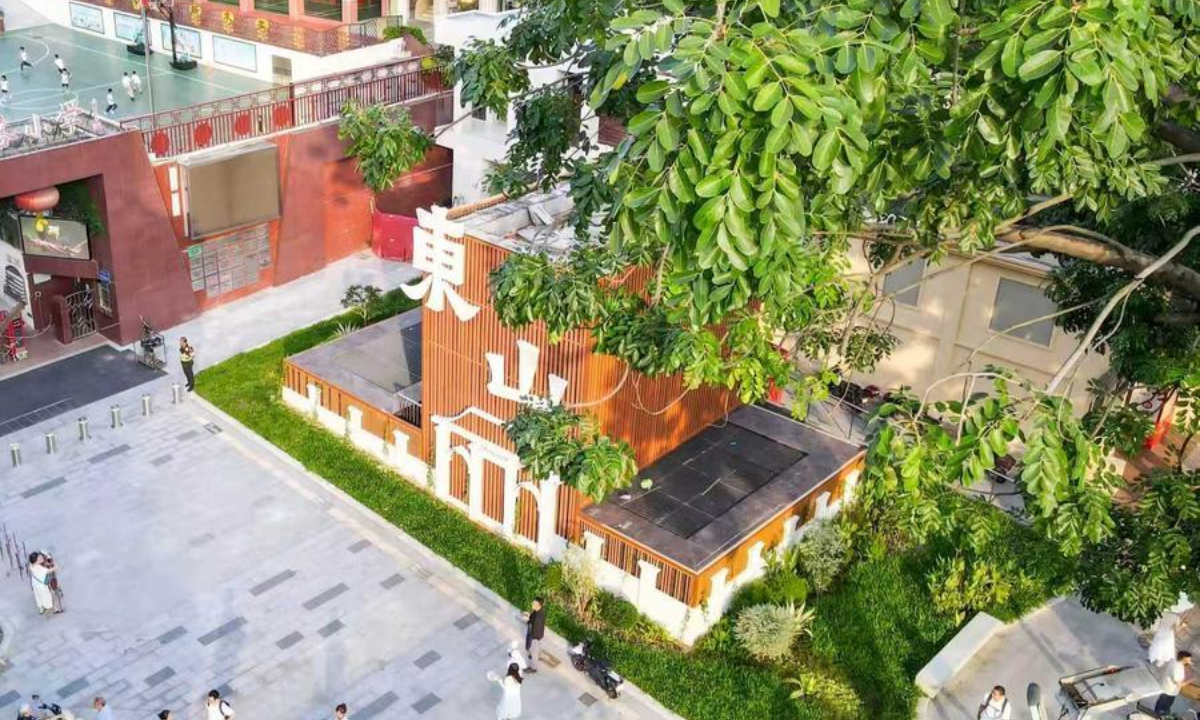
An aerial drone photo taken in October 2025 shows a view of the Dongshan pocket park in Guangzhou, south China's Guangdong Province. (Xinhua)When 72-year-old Shi Jikun opened his windows at home in Yuxi, southwest China's Yunnan Province, he used to hear the repeated thud of balls and blowing of whistles from an indoor sports venue near his residential community.
"During the day, I didn't dare open the windows," Shi said, recalling years when the noise disrupted his daily routine.
The sports venue has since undergone two rounds of soundproofing. Sound-absorbing materials were installed on its walls, while double-glazed soundproof windows were fitted along the side facing the residential area.
The noise has eased. "The neighborhood is quiet now, making everyday life much more comfortable," Shi noted.
Shi's experience is part of a broader move underway across China to tackle one of the less obvious costs of urbanization: the growing amount of noise packed into increasingly dense neighborhoods.
As cities expand, the likes of homes, roads, businesses, construction sites and recreational spaces are often crammed together. China has, notably, been testing a neighborhood-level response to this challenge via the development of "quiet communities," combining physical upgrades with local management and mediation.
This initiative was launched as a national pilot project in May 2023. By the end of 2025, a total of 3,272 quiet communities had been built nationwide, benefiting more than 2.4 million households, according to the Ministry of Ecology and Environment.
This approach now also has a stronger legal footing. On Saturday, China's Ecological and Environmental Code came into force, with a dedicated section on noise pollution prevention and control.
The scale of the problem is reflected in noise complaints. In 2025, cities at the prefecture level and above received about 6.83 million noise-related complaints, with social-life noise accounting for 73.2 percent.
Noise from neighbors, equipment malfunctions and disturbances from square dancing, a popular group exercise in China often held by middle-aged and older residents in public spaces, were among the most common issues raised.
China's quiet-community program is designed to address such problems before they become recurring disputes. "Quiet communities do not mean that there should be no sound," said Lu Lu, deputy head of the noise management division at the Ministry of Ecology and Environment.
The goal, Lu said, is to create a comfortable and harmonious living environment while balancing everyday activity with residents' need for quiet.
The solutions vary from place to place. In south China's Shenzhen, some newly built residential communities are incorporating noise control at the planning and design stage. Measures include low-noise pavements, vegetation buffers, separated pedestrian and vehicle routes, and automatic noise-monitoring equipment.
Older communities are using renovation projects to address noise concerns. In Xiaoshan District in east China's Hangzhou, Huiyu garden community replaced aging elevators and repaired drainage grates and other public facilities as part of its quiet-community program.
But physical upgrades alone cannot settle conflicts between neighbors.
At Fenglin Shunhe community in Weihai, eastern China's Shandong Province, residents, property managers, community officials and square-dancing groups agreed to end dancing at 8:30 p.m. The main lights in the square switch off at that time, signaling that it is time for the dancers to leave.
The key is to respond quickly to complaints and give residents and activity groups a way to negotiate solutions, said Jiang Chunyan, head of the neighborhood committee.
In another community in Shenzhen, property managers have gone further by treating renovation noise as a process to be managed proactively rather than a problem to be addressed after complaints arise.
Renovation work is divided into nine stages and mapped on a visual noise-management chart. Property managers use the chart to carry out targeted inspections as work progresses. Contractors are also required to work only during designated hours and under fully enclosed conditions.
The program still faces gaps in terms of regional coverage and long-term maintenance. Quiet communities remain concentrated in a few cities, while older neighborhoods and parts of central and western China have fewer projects. Some communities also face difficulties maintaining noise-control measures after initial upgrades are completed.
The Ministry of Ecology and Environment plans to incorporate quiet-community development into China's noise pollution prevention and control work for the 2026-2030 period. It has called for regular inspections, dynamic monitoring and follow-up visits to ensure that measures remain effective.
Zheng Shanshan, an official responsible for ecological affairs in Hangzhou's Xiangfu Subdistrict, said the next step should extend noise management from individual communities to larger areas through tools such as sound-environment maps.
"Quiet communities are only a starting point," Zheng said. "We hope to create more quiet spaces across the city."
。 AI摘要
持续降雨,我市保障“菜篮子”供应,肉、菜、蛋、水产货源充足。

B | 昨日数据显示,大白菜等常见蔬菜价格稳定,批发量增价稳。本地瓜果上市,外调蔬菜补充,供应充足。伏休结束,水产品增多,价格下降。
连日来持续降雨,我市筑牢“菜篮子”保供防线,肉、菜、蛋、水产货源充足、供应稳定。 昨日厦门最新的农超零售均价显示:我市大白菜、圆白菜、白萝卜、土豆等大众家常菜价格亲民、供货稳定,例如,大白菜平均价格1.98元/500克,胡萝卜和白萝卜分别为1.99元/500克和1.61元/500克,圆白菜2元/500克,花菜、上海青、空心菜、尖椒等均为每500克3元多。市场人士分析,为对冲天气带来的供应波动,我市大型农产品批发市场主动加大外调力度,跨省调配蔬菜入厦,守住供应基本盘,目前,蔬菜价格整体稳定。 据有关部门最新监测数据显示,8月17日至8月23日,全市蔬菜批发上市量达19279吨,环比上涨1.5%,供应量稳中有升;蔬菜平均批发价格3.40元/千克,环比小幅下降0.5%,呈现量增价微降的良好态势。 当前正值本地瓜果蔬菜集中上市期,大瓜、胡瓜、苦瓜、丝瓜、秋葵、豌豆等果蔬批量上市、货源充裕。“这些瓜类都是耐贮存蔬菜,也是外地最近大量调入的品种。这些蔬菜的上架期长,厦门市民也都喜欢。”在夏商(中埔)农产品批发市场,蔬菜大户陈女士告诉记者。

C | 此外,由于为期三个半月的海洋伏季休渔正式结束,厦门海域全面开渔,我市部分本港水产品供应极大丰富,价格下跌20%至30%。(厦门日报记者 沈彦彦)。
Current article:http://v7gtc.minshixuanhabing.bond/news/20260826_775.html
Published on:17:36:44